 Nederlands
Stabbing pain in knee at rest
You are sitting on the sofa in the evening after a busy day and suddenly you feel it: a stabbing pain in your knee at rest. It is a very annoying complaint that can keep you from sleeping or make relaxing impossible. Knee pain that comes on just when you are not moving often causes anxiety and questions. At Fysio Fitaal, we often see people with these specific pain symptoms. We are happy to help you identify the exact cause, so you can quickly get back to sitting, sleeping and moving comfortably.
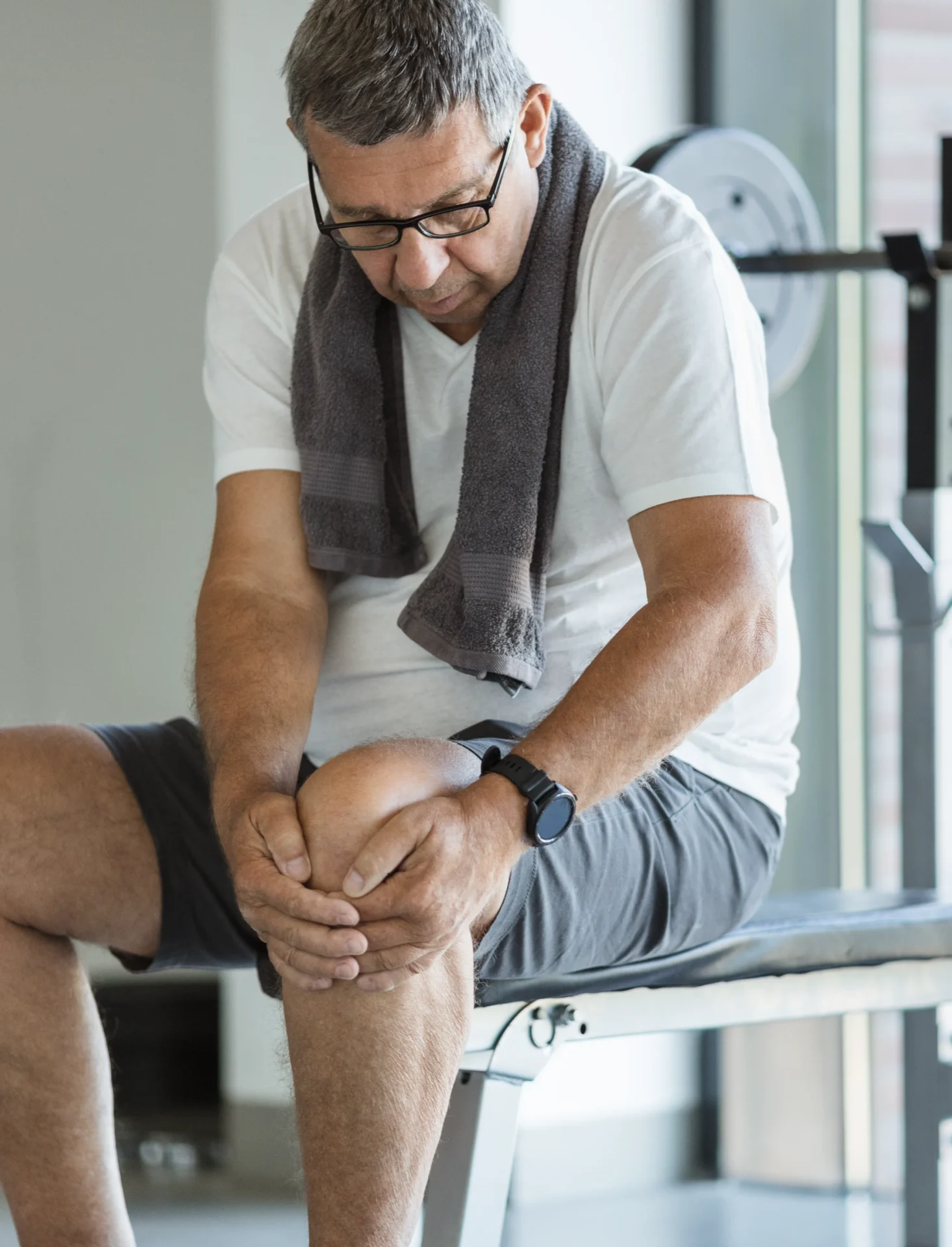
What does a stabbing pain in your knee at rest mean?
A nagging pain in your knee at rest often feels like constant, dull pressure deep in the joint. A stabbing knee at rest, on the other hand, is much sharper and can come on suddenly, as if a needle is piercing the tissue. Both forms of knee pain often occur because your knee retains fluid while sitting still or because blood flow in the tissue changes. When you stop moving, the knee joint cools down and any inflammatory fluid can accumulate in the hollow of the knee or around the kneecap. This swelling increases pressure on the nerves and tissues in your knee. This explains why you may not be bothered by anything during the day while walking, but suddenly feel stitches in your knee in the evening or at night.
Common causes of knee pain at rest
There are several reasons why your knee gets sore just at rest. It is often a delayed reaction to activities you did earlier in the day, but it can also indicate dormant tissue damage in the joint.
Overuse and patellofemoral pain syndrome
A common cause of a stabbing knee pain is a overloaded knee. In this case, you have put more strain on the structures around your knee joint than they can handle, for example, due to intensive running training or heavy physical work. You often don't feel the tissue reaction until hours later. In addition, we regularly treat patients with the patellofemoral pain syndrome. This is a medical term for pain around or behind the kneecap (the patella). In this complaint, the kneecap does not run completely smoothly through the groove of the upper leg. This causes irritation to the cartilage or tendons, which often translates into painful stitches in your knee, especially after exertion or when sitting for long periods with bent knees.
Bursitis and tendonitis
Another possible culprit is bursitis, or bursitis. A bursa is a small, fluid-filled cushion that prevents tendons and bones from rubbing roughly along each other. When this cushion becomes inflamed due to excessive friction, it swells. Once you are at rest, this swelling creates extra pressure in the knee. This results in a persistent, nagging pain knee at rest. Irritated tendons, such as inflammation of the patellar tendon just below the kneecap, can also cause nasty stinging in the knee at rest.
Osteoarthritis or cartilage wear
Osteoarthritis may play a role in older patients or athletes who have put heavy strain on their knees for years. Osteoarthritis is a form of cartilage wear in which the smooth layer of cartilage over the bone ends becomes thinner or more irregular. In the early stages, this often leads to starting pain when moving again after a period of sitting still. In more advanced stages, people often experience a nagging pain in the knee at rest or even night pain that causes them to wake up.
Diagnosis with ultrasound in Fysio Fitaal
To provide targeted treatment, we need to know exactly where the stabbing pain in the knee is coming from. At Fysio Fitaal, we use modern ultrasound to do this. With an ultrasound machine, we literally look through the skin at the structures in your knee. We bring muscles, tendons, bursas and any fluid build-up into focus. This helps us detect tissue damage or inflammation immediately. This way, we make an exact diagnosis and tailor the treatment exactly to what your knee needs.
The treatment path for your knee problems
Together, we work on your recovery according to our proven Fitaal Method. In the first treatment phase, the full focus is on reducing the stabbing pain and making the swelling go down. We advise you on the right balance between rest and responsible exercise, giving the tissue a chance to recover. In the second phase, we gradually rebuild mobility and muscle strength around the knee. This is because strong leg and buttock muscles act as powerful shock absorbers; they absorb the blows and take the strain off the fragile knee joint. In the final phase, we focus entirely on functional exercises. We make your leg structurally loadable again, so you can return to your daily activities and sporting goals without fear or knee stitches. We guide you until you regain optimal function.
Make an appointment at Fysio Fitaal
Don't walk around unnecessarily with a painful knee. At Fysio Fitaal, we will be happy to help you with a clear diagnosis and a personalised treatment plan. Make an appointment with one of Our locations in Tilburg (Reeshof, South, West or North) and start your recovery today. Get in touch, we are here for you.
Frequently asked questions about stabbing knee pain
Why exactly does my knee hurt when I lie on the couch at night?
When you stop moving, the joint cools down and blood circulation decreases. This allows inflammatory fluid to accumulate in the knee, causing increased pressure on tissues and nerves. This causes the nagging or stabbing pain when you rest.
Can I keep exercising with a stabbing pain in my knee?
We generally advise against exercising with sharp, stabbing pain, as this is often a signal of tissue damage or overexertion. However, light exercise without pain, such as gentle cycling or walking, is good for blood flow. Always consult with a physiotherapist about what is safe for your specific situation.
How long does recovery from knee pain take at rest?
Recovery time is highly dependent on the underlying cause. A mild strain often improves within two to four weeks with proper rest and exercises. For persistent tendonitis or bursitis, recovery can take several months.
What can I do myself to reduce the stitches in my knee?
You can cool the knee with an icepack (wrapped in a tea towel) for up to 15 minutes to reduce swelling. Also, raise your leg slightly when sitting on the sofa and alternate periods of rest with light, pain-free movement to keep the joint supple.
When should I contact a physiotherapist?
Contact us if the stabbing pain does not subside after a week, if your knee becomes swollen or warm, or if the pain interferes with your daily activities and sleep. Also, if knee pain keeps returning after exercising, a professional assessment is wise.
Related exercises



Related complaints

Bursitis
Bursitis is a common musculoskeletal complaint involving a bursa, a fluid-filled...

Tendinitis knee
You often notice it at the first step out of bed or while climbing stairs: a...
Traumatic osteoarthritis after a knee injury
Post traumatic osteoarthritis is a subtype of osteoarthritis and occurs after a significant injury
Make an appointment at Fysio Fitaal
We work from multiple locations in Tilburg, always close by for professional and accessible physiotherapy. Fill in the contact form and we will contact you soon. Together, we will work on your recovery!