 Nederlands
Bruised or sprained knee
You make a wrong move while playing sports or you take a hard fall, and suddenly pain shoots into your joint. A knee injury can hamper you considerably in your daily activities. Fortunately, often there is no serious damage to the bone or meniscus, but you are dealing with a bruised knee or a sprained knee. In this article, we explain how to recognise this injury, what the expected recovery time is and how we at Fysio Fitaal in Tilburg can guide you to a pain-free recovery.
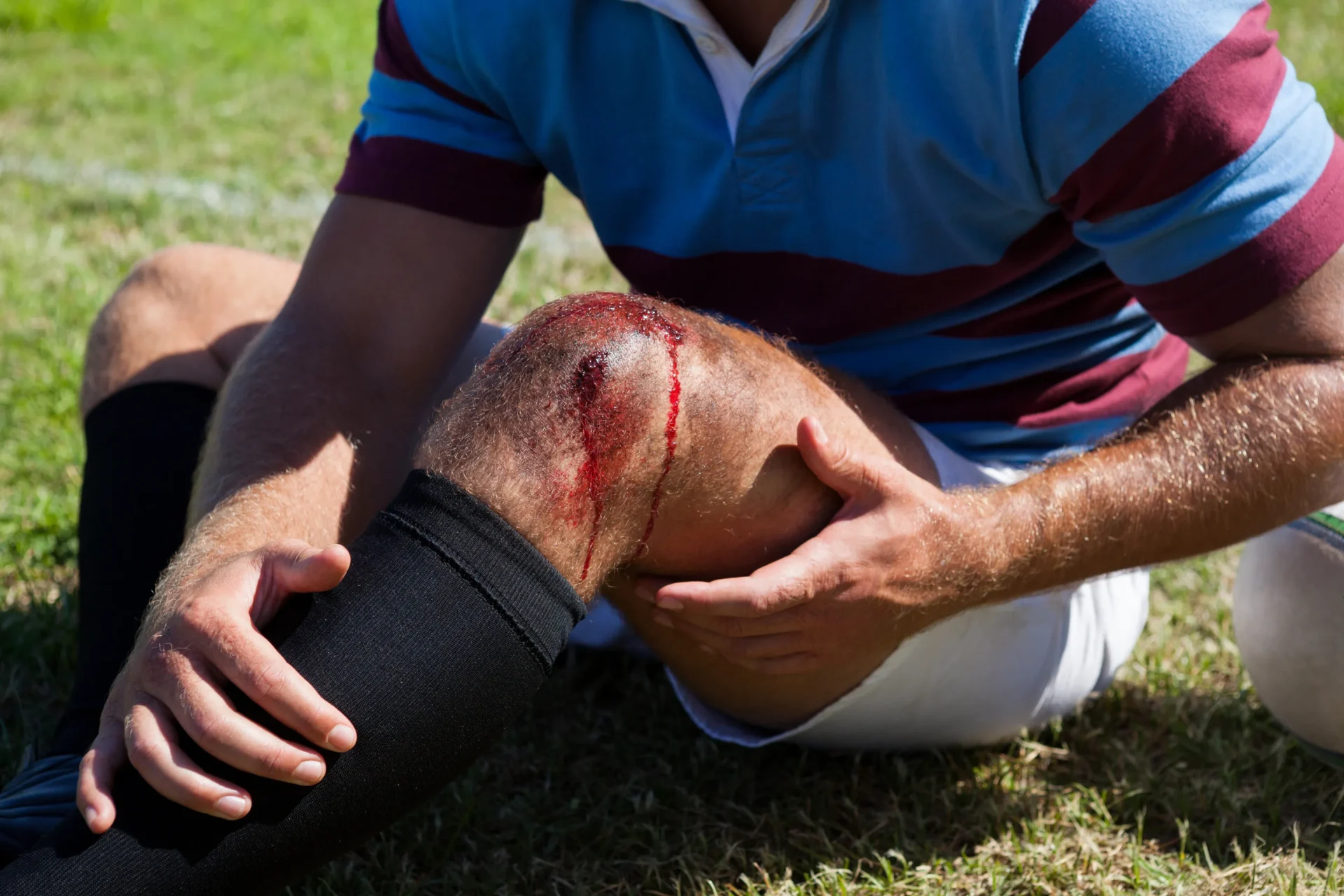
What is the difference between a bruised and sprained knee?
In a bruise (contusion), the subcutaneous tissue has been damaged by being pressed against the underlying bone with great force. This happens, for example, after a fall or when you hit your knee hard. In a pure contusion, the bones, knee ligaments and meniscus are basically fine. However, the tissue reacts with an inflammatory reaction, leading to fluid accumulation and pain. When we talk about a sprained knee (or a sprain), we are specifically talking about the muscles or ligaments around the joint being stretched too far. This often happens when you overstretch your leg or twist your knee while keeping your foot firmly on the ground. Both injuries are very similar in terms of symptoms and require a similar initial approach.
How do you know if your knee is bruised?
The symptoms of a bruised knee are often quite noticeable immediately after the incident, but can also progress in the hours that follow. You generally experience pain at both rest and movement, and bending or stretching your leg feels stiff and uncomfortable. In addition, the area is often very sensitive when you put pressure on it.Another typical feature is that the knee slowly thickens due to an accumulation of fluid and blood. Sometimes a bruise (haematoma) also forms, turning your knee blue. Do you only get stiffness and slight swelling the next morning? Then the damage is usually limited. However, does your knee become extremely swollen within two hours, did you hear a snapping sound or can't stand on it at all? Then there may be more serious injury, such as a torn anterior cruciate ligament or a meniscus injury.
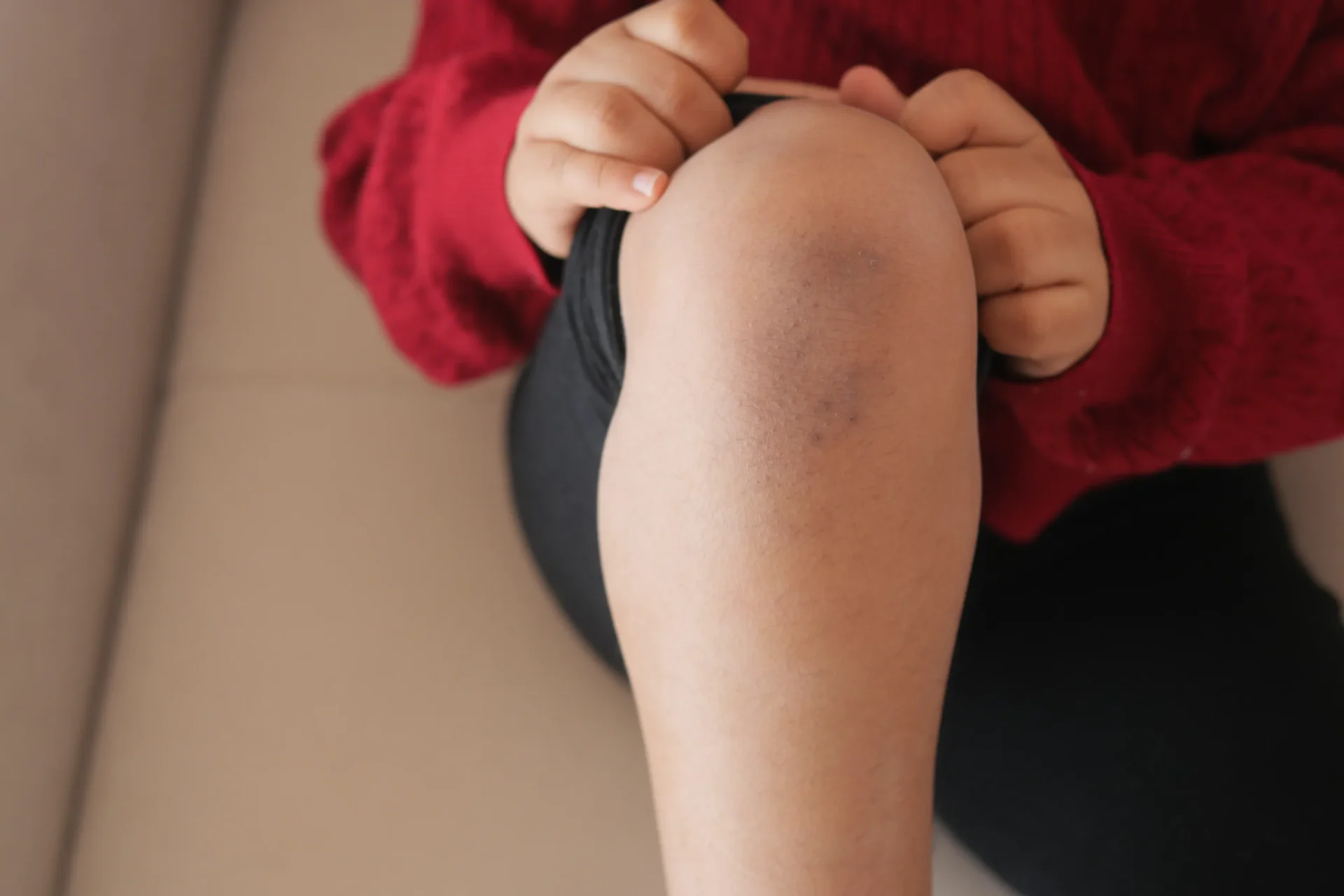
How long does recovery from a bruised knee take?
Everyone recovers at their own pace. The recovery time of a bruised knee depends very much on the degree of tissue damage. With a mild bruise, symptoms often diminish significantly after just one week. If you have bruised your knee badly, the recovery process can sometimes take up to six weeks.
| Phase | Period | Focus and expectations |
|---|---|---|
| Phase 1 | Week 1 | Give rest, reduce swelling and move gently within pain limits. |
| Phase 2 | Week 2-3 | Pain decreases, increase mobility and pick up light daily activities. |
| Phase 3 | Week 4-6 | Build muscle strength and start specific physiotherapy exercises. |
| Phase 4 | Week 6+ | Preparing for sports resumption and full loading of the joint. |
What to do with a bruised knee?
Immediately after sustaining the injury, it is best to apply the RICE principle. This stands for Rest, Ice, Compression and Elevation. Immediately stop the activity you were doing to prevent further tissue damage. Then cool the knee with ice wrapped in a tea towel, which cushions the pain and prevents excessive swelling. Applying a pressure bandage or knee brace can also provide additional support. Finally, it helps to put your leg up high, for example on a cushion on the sofa, so that excess fluid drains away more easily. Besides this first aid, keeping moving is incredibly important. Total rest will only make the joint stiffer. Try quietly bending and stretching your leg a few times every hour. As soon as the worst pain has passed, you can start light exercises to make the muscles around the knee loadable again.
Bruised knee and work, cycling or sports
Once the worst of the swelling has gone down, you can slowly become more active again. Sports involving a lot of shock or unexpected turning movements, such as running or football, are best avoided for a while. A bruised knee and cycling, however, are often a very good combination. Cycling is smooth, does not stress the joint with hard knocks and keeps your leg muscles active. Always build up the load gradually and discuss with a professional what is sensible if you do physically demanding work.
Physiotherapy and ultrasound at Fysio Fitaal in Tilburg
If the symptoms are not abating or you are unsure about the severity of your injury, we at Fysio Fitaal will be happy to help you. Our physiotherapists have extensive experience with knee problems and sports injuries. During the first appointment, we can use ultrasound to visualise exactly what is going on. Together, we draw up a treatment plan that suits your goals and lifestyle. This consists of targeted exercise therapy to strengthen your quadriceps and surrounding leg muscles. With our specialists for sports physio in Tilburg We guide you step by step, so that you not only recover well, but also come back stronger to prevent new injuries in the future.
Make an appointment at Fysio Fitaal
Do you keep experiencing hindrance from your knee or want to make sure you are taking the right steps in your build-up? At Fysio Fitaal, we are happy to guide you towards a fit and strong body. Contact us directly or make an appointment at one of our practices in Tilburg, and together we will make sure you get moving again soon.
Frequently asked questions about a bruised or sprained knee
What does a bruised knee feel like?
A bruised knee feels painful, stiff and often somewhat oppressive due to fluid accumulation in the joint. You experience a nagging pain when resting, which may turn into a sharper pain when you bend, stretch or touch the knee.
Can I walk with a bruised knee?
Yes, it is actually very good to keep walking small stretches as long as the pain is bearable. This will prevent your knee from becoming completely stiff. However, don't force anything and possibly use crutches in the first few days if the pain is too severe when standing.
How long should I cool a bruised knee?
In the first 48 hours after the incident, cool your knee regularly for about 15 to 20 minutes at a time. Always make sure to put a tea towel or towel between the ice pack and your skin to prevent frostbite.
What if my knee is still thick after a week?
If the swelling and pain have not reduced at all after a week, or if the knee occasionally locks up, it is wise to consult your GP or physiotherapist. There may then be underlying injuries that require more focused attention.
Does a knee brace help recovery?
A knee sleeve or brace can give your knee some extra strength and relieve pain during daily movements. It does not speed up tissue healing itself, but it can help you stay active with more confidence.
Related exercises



Related complaints

Medial band knee(MCL)
An injury to the inner ligament of the knee requires accurate diagnosis and a...
Meniscus injury
A meniscus injury is one of the most common knee problems in Physiotherapy
Make an appointment at Fysio Fitaal
We work from multiple locations in Tilburg, always close by for professional and accessible physiotherapy. Fill in the contact form and we will contact you soon. Together, we will work on your recovery!