Nederlands
When is shockwave therapy effective for tendon problems?
A tendon injury that has been ongoing for some time and is not healing requires more than just rest. It is precisely with these long-term symptoms that shockwave a targeted treatment for tendon injuries, particularly when movement causes pain and recovery is slow to progress.
At Fysio Fitaal in Tilburg, shockwave therapy forms part of the treatment plan, particularly for long-term conditions. However, we do want to make a precise diagnosis first to determine whether shockwave therapy is indeed the best approach for your tendon injury.
What exactly are tendon problems?
Tendon problems rarely result from a single isolated incident. In most cases, they are caused by repeated strain on the tendon. This may be combined with other factors that hinder recovery. These include getting enough rest, sleep and nutrition, as well as managing stress. Physically speaking, the strain placed on the tendon is greater than it can handle over a prolonged period. Think of the Achilles tendon in runners, the plantar fascia in people who have to stand on their feet for long periods at work, shoulder problems in fitness training, tennis elbow or the patellar tendon in sports involving a relatively high amount of jumping and acceleration.
At first, you often only feel stiffness when you start exercising, for example during the first few minutes of a run. Later on, the pain may return during exercise, or it may actually get worse afterwards. That is when many people finally seek help.
In everyday language, we still refer to this as tendonitis; that’s fine, but technically speaking, it’s slightly different. In cases of long-term tendon problems, we mainly see changes in the structure of the tendon. We call this tendinopathy. Tendon = tendon; ‘pathos’ comes from ‘pathology’, meaning a disorder. The tendon’s capacity to withstand stress has decreased, whilst the stress from work, sport or daily life has remained the same or even increased. It is precisely this imbalance that is the problem. Anyone who merely suppresses the pain without addressing the underlying issue will find that the problem keeps coming back.
When is shockwave therapy effective for tendon problems?
Shockwave therapy is a treatment we can use for tendon problems that do not respond to lifestyle or sporting adjustments and have persisted for more than three months. It is explicitly not a standard solution for every tendon injury. The decision depends on the location, the duration of the symptoms, the tissue’s ability to withstand stress, and whether the condition involves tendon irritation, degenerative changes in the tendon, or, for example, calcium deposits.
Shockwave therapy is a particularly valuable addition when dealing with chronic conditions. Examples include:
- Plantar fasciitis (heel spur)
- Achilles tendinopathy
- Patellar tendon problems (jumper's knee)
- Tennis elbow
- Calcium deposits in the shoulder
And even then, shockwave therapy is never used on its own. The treatment forms part of a clear treatment plan that involves gradually increasing the workload, making adjustments to sporting activities, and incorporating various forms of strength training.
How does shockwave therapy work?
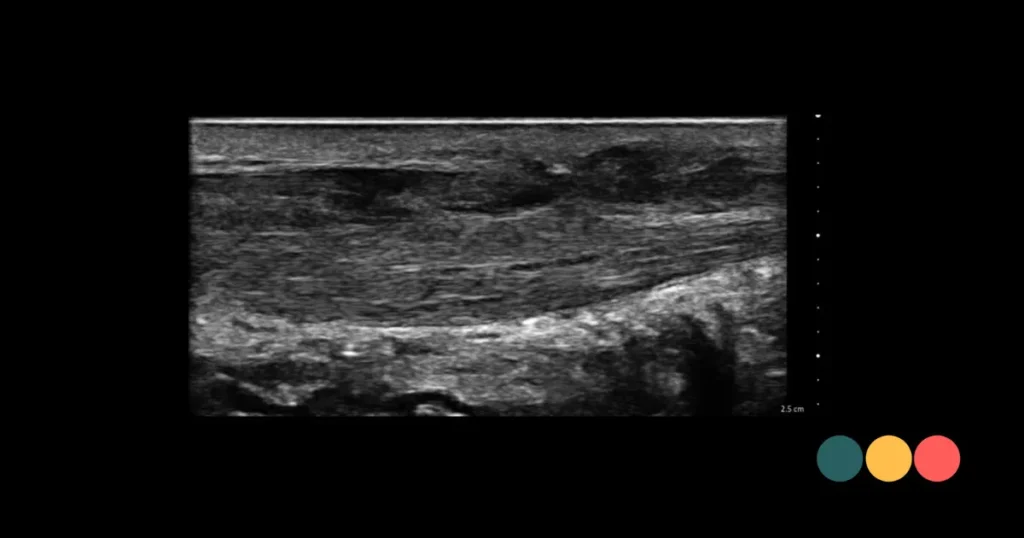
Shockwave therapy uses mechanical waves that are directed at the affected area. These stimuli stimulate the local healing process. Put simply, it provides a targeted stimulus to encourage the body’s natural healing capacity to kick into action in a place where healing has been delayed.
Exactly what happens varies depending on the condition and the stage of treatment, but the treatment affects factors such as the pain threshold and local tissue activity. In cases of calcium deposits in the shoulder, shockwave therapy can also help the body to better absorb the calcium deposits.
That may sound technical, but the aim is very practical: less pain, greater resilience, and a tendon that can rebuild itself through training, work and everyday life.
For which tendon conditions is shockwave therapy suitable?
Achilles tendon injury
If you have a painful Achilles tendon or heel pain, walking, climbing stairs or running is often restricted. Particularly when morning stiffness keeps returning and running is no longer possible, shockwave therapy is a useful addition to eccentric training or heavy slow resistance exercises.
Tendon plate under the foot
Pain under the heel when taking the first steps out of bed is the classic symptom of plantar fasciitis. Are insoles, rest or stretching not helping enough? In that case, shockwave therapy for tendon problems in the foot can help get the recovery process back on track. Here too, combining treatment with targeted exercise therapy remains crucial to the final outcome.
Hamstring
Jumper’s knee is common among volleyball players, basketball players and footballers, but also among people who do a lot of strength training or engage in explosive movements. If symptoms persist, rest alone is not enough. The tendon needs to gradually relearn how to cope with the stresses of strength training and jumping. Shockwave therapy can support this process.
Tennis elbow
Tennis elbow is more persistent than many people initially expect. Simple actions such as squeezing, lifting, typing or picking up a pan can be painful. Shockwave therapy is regularly used to treat this condition, particularly when the symptoms have persisted for months and the tendon attachment has become hypersensitive.
Shoulder tendon problems
Shoulder problems are often complex, and not every shoulder injury is simply a tendon injury. We identify the cause of the symptoms by looking at objective indicators such as loss of strength, restricted mobility or impaired control of the surrounding muscles. Accurate diagnosis is therefore essential here. Shockwave therapy can be particularly beneficial for calcium deposits or chronic pain. However, not every shoulder injury responds well to shockwave therapy. That is why it is important to first establish the nature of the injury.
What can you expect from the treatment?
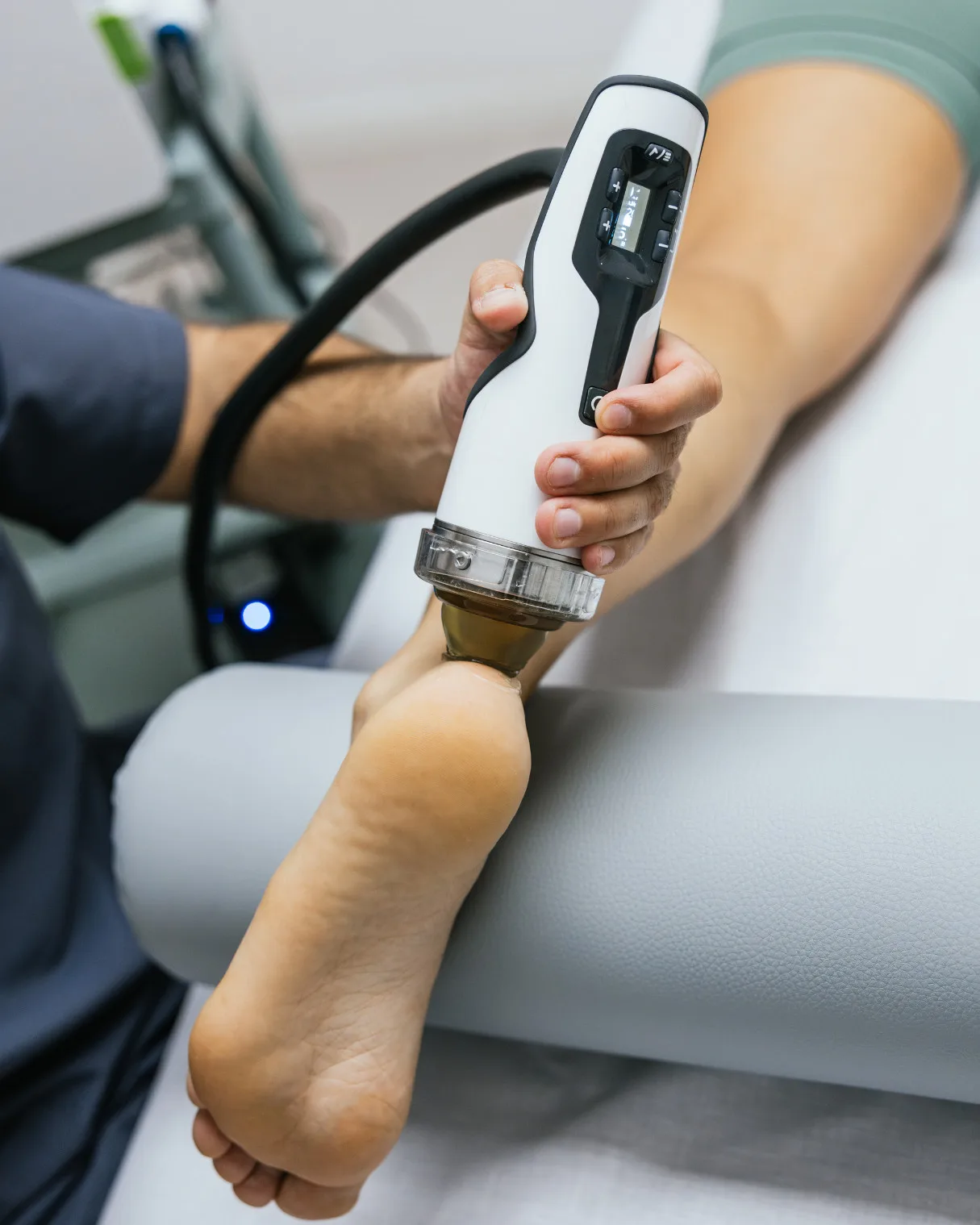
A shockwave treatment is short, targeted and easy to fit into your daily routine. During the treatment, we apply a pulse directly to the painful area. This can be sensitive, particularly in areas where the tendon is still reactive. We adjust the intensity to what is necessary, but above all to what is manageable. The aim is certainly not to cause as much pain as possible, but to provide sufficient stimulation to achieve the desired effect.
It usually takes four to five sessions, spread over a few weeks. The exact number depends on the problem, how long it has been going on, and how your body responds. Some people notice a difference quickly, whilst others only do so after a few treatments. And it’s still the case that tendon injuries heal slowly and take time.
After treatment, the area may feel temporarily sore or more sensitive. This doesn’t mean that the treatment hasn’t worked. However, it is important to manage your activity levels carefully after treatment. Carrying on as if nothing is wrong won’t work. Complete rest isn’t advisable either. It’s important to keep in close contact with your therapist during this period.
Shockwave therapy for tendon problems: benefits and limitations
The main benefit of shockwave therapy is that it delivers targeted stimulation to areas where the natural healing process is slow. This often makes all the difference, particularly in cases of long-term tendon problems. You’ll find your exercises go much more smoothly and the pain you experience during everyday activities will ease.
At the same time, there is a clear limit. Shockwave therapy is not a quick fix. If the underlying cause of the strain persists – for example, building up training too quickly, insufficient strength, limited mobility or an uneven distribution of load at work or in sport – the tendon will remain vulnerable. The treatment may provide temporary relief, but do not expect a lasting result.
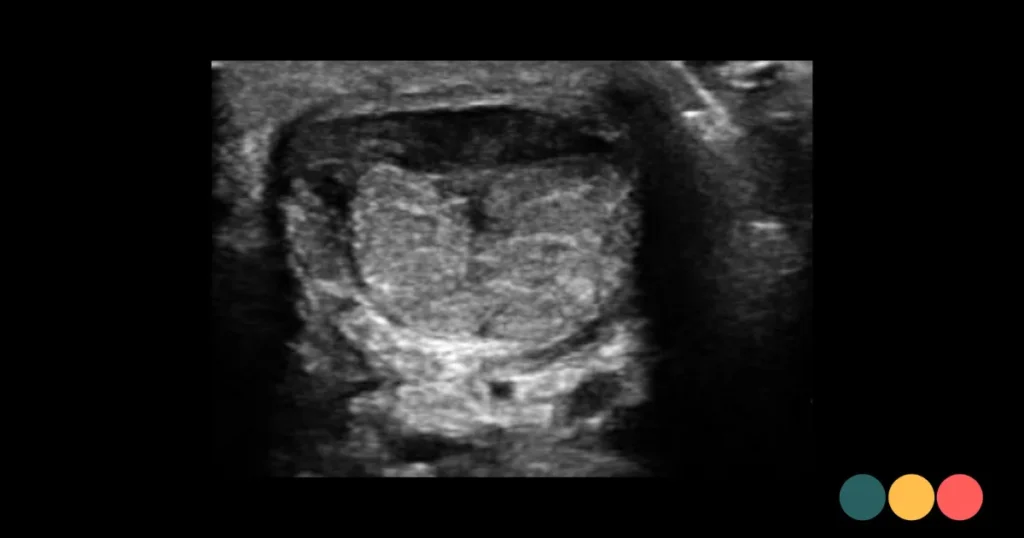
That is why, at Fysio Fitaal, we look beyond the pain itself. Through a comprehensive assessment, strength tests and, where necessary, ultrasound scans, we identify what is happening within the tissue and determine what level of exertion is appropriate at that moment. No guesswork – just transparent physiotherapy.
Why exercise therapy is almost always necessary
We cannot stress this enough: a tendon will not heal through passive treatment alone. The tissue must be able to cope effectively with stress, stretching, speed and force production. This requires a rehabilitation programme tailored to your specific situation.
Effective exercise therapy is not simply a matter of moving the affected area. It is all about the right intensity, the right frequency, and it must be carried out at the right stage of the recovery process. Training that is too light does not provide the body with enough stimulus to adapt. Training that is too intense, on the other hand, causes further irritation. That is why the combination of shockwave therapy and active rehabilitation almost always works better than shockwave therapy on its own.
How soon will you see results?
That depends on the problem and the stage you’re at. For some people, the pain eases within a few sessions. For others, you’ll first notice that the initial pain subsides, or that walking, working or exercising becomes just a little bit easier.
At Fysio Fitaal, we don’t just judge success by pain scores, but primarily by function. Can you climb stairs again without any residual pain? Can you gradually build up to running again? Can you raise your arm above your head again? It’s that sort of measurable progress that counts. Precisely because tendon injuries can take a long time to heal, a realistic recovery plan is essential.
Who is shockwave therapy less suitable for?
Not every tendon problem requires shockwave therapy. In cases of acute symptoms, clear tendon tears, certain nerve issues or pain that actually originates elsewhere, we take a different approach. And if the diagnosis is unclear, treatment is of little use anyway. First you need to know what the problem is; only then can we intervene in a targeted manner.
Furthermore, the response varies from person to person. Realistic expectations are an essential part of a good treatment plan. The aim is not only to reduce pain during treatment, but above all to improve your ability to function in daily life.
Targeted treatment of tendon injuries
If you’re suffering from long-term tendon problems, you want an approach that offers more than just a temporary fix. Shockwave therapy can help you in that process, provided the indication is correct and the treatment is combined with a responsible build-up of activity. Not every tendon needs shockwave therapy, but for the right condition, it helps to get a stalled recovery back on track.
Have you been suffering from a persistent tendon problem for some time? Book an appointment at Fysio Fitaal in Tilburg. We’ll assess your condition, evaluate your current situation and work with you to determine whether shockwave therapy is suitable for your tendon problem.