Nederlands

Purpose of the exercise
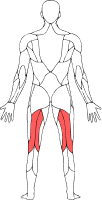
Aims to strengthen hamstrings and glutes. Improves trunk stability and hip control during movement. Supports injury prevention and recovery from hamstring injuries.
Supplies
-
Swiss ball / exercise ball
-
Mat or comfortable surface
Starting position
-
Lie supine on a mat
-
Place the heels on the Swiss ball
-
Arms along the body for stability
-
Legs slightly extended
-
Core tightened
-
Lift hips up into a bridge position
Implementation
-
Keep hips steadily raised
-
Pull the Swiss ball towards the body by bending the knees
-
Roll the ball towards the buttocks
-
Actively tighten hamstrings and glutes
-
Stretch out the legs again in a controlled way
-
Slowly roll the ball back to the starting position
-
Maintain control throughout movement
Points of interest
✓ Hold the hips up stably
✓ Core continuously tightened
✓ Move slowly and in a controlled manner
✓ Actively tighten hamstrings and glutes
✓ Move within a pain-free range
✗ Sagging hips
✗ Execution too fast
✗ Compensation from the lower back
✗ Insufficient control of the ball
✗ Ignoring pain in hamstrings or lower back
When this exercise?
The hamstring curl with Swiss ball is used to improve strength and control of the hamstrings. Due to the unstable surface, the stability of the trunk and pelvis is also additionally trained.
The exercise can be used within strength training and within rehabilitation programmes aimed at hamstring recovery or injury prevention. By adjusting the exercise in difficulty, it can be used in different training phases. Application, loading and progression should always take place in consultation with a physiotherapist or other qualified professional to ensure that the exercise is safe and tailored to the individual's load capacity, symptoms and recovery status.