Purpose of the exercise
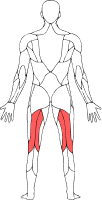
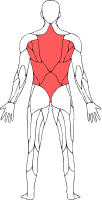
Strength exercise for the lower back (erector spinae), glutes (gluteus maximus) and hamstrings. Improves stability of the lumbar spine and helps prevent back pain by improving posture and overall load capacity.
Supplies
- Hyperextension (45-degree or 90-degree variant)
- Optional: weight disc or dumbbell for resistance
Starting position
- Adjust the hyperextension bench so that the pad sits just below your hip bones
- Place your ankles/lower legs behind the footrests
- Cross your arms in front of your chest or place your hands behind your head
- Bend forward from your hips until your upper body hangs down (about 45-90 degrees)
- Keep your back in neutral position (not round)
- Look at the ground, keep your neck neutral
Implementation
- Tighten your buttocks and lower back
- Straighten your upper body by stretching your hips
- Come up until your body is in a straight line (horizontal)
- Hold this end position for 1-2 seconds
- Allow controlled return to starting position
Points of interest
- ✓ Move from your hips, not your lower back
- ✓ Keep your back neutral (maintain natural curvature)
- ✓ Tighten your buttocks during the upward movement
- ✓ Stop at horizontal position
- ✗ Avoid bending too far back (hyperextension)
- ✗ Don't pull with your neck, keep it in line with your back
- ✗ Do not make rocking or swaying movements
- ✗ Make sure your lower back does not bulge underneath
Progression
- Start: Arms crossed in front of chest, bodyweight only
- Advanced: Hands behind the head
- Heavier: Holding weight disc in front of chest (5-10 kg)
- Additional challenge: Tempo variations (5 seconds down)
- Alternative: Single-leg back extension for extra stability
- Heaviest variation: Barbell on shoulders (advanced athletes)
When this exercise?
This exercise is suitable for athletes of all levels who want to strengthen their lower back for back pain prevention or as a supplement to compound exercises such as squats and deadlifts. Also valuable during rehabilitation after lower back injuries (in consultation with physiotherapist). Start light after back injuries and build up gradually. Do not perform during acute back pain or first phase of a herniated disc.
 Nederlands