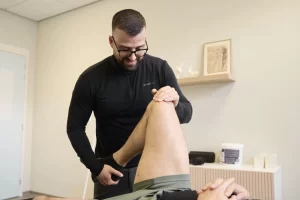
Calf Raise Seated
Purpose of the exercise
Focuses on strengthening the soleus and, to a lesser extent, the gastrocnemius. Improves strength, endurance and load capacity of the calf muscles and Achilles tendon. Important for walking, running and long-term loading, and relevant within both rehabilitation and performance training.
Supplies
Starting position
-
Take a seat on the seated calf raise machine or bench
-
Place the front feet on the platform
-
Heels clear of the platform
-
Knees bent at about 90 degrees
-
Weight placed above the knees (if applicable)
-
Torso upright and relaxed
Implementation
-
Start from a neutral ankle position
-
Push the heels up by stretching the ankles
-
Come up controlled as high as possible on the forefeet
-
Keep tension at the top of the movement
-
Slowly lower the heels
-
If necessary, sink slightly below neutral for full range of motion
-
Maintain constant control during movement
Points of interest
✓ Move in a controlled manner and over full range of motion
✓ Pressure through the big toe and midfoot
✓ Keep knees and lower legs stable
✓ Breathe calmly and evenly
✓ Focus on tension in the calf muscles
✗ Bounce or use momentum
✗ Lowering heels too quickly
✗ Single tilt inwards or outwards
✗ Excessive load without control
✗ Ignoring pain in calf or Achilles tendon
When this exercise?
Calf raise seated is used to strengthen the soleus muscle and Achilles tendon in a targeted way, especially in cases of prolonged or repeated strain such as walking and running. The exercise is very suitable within rehabilitation after Achilles tendon or calf injuries, but also preventively for athletes who experience a lot of running and jumping loads.
Because the exercise is performed in a stable, seated position, the load is easy to dose and can be safely applied in different phases of training and recovery. Application, load and progression should always take place in consultation with a physiotherapist or other qualified professional, so that the exercise is tailored to individual load capacity, symptoms and recovery status.
 Nederlands